
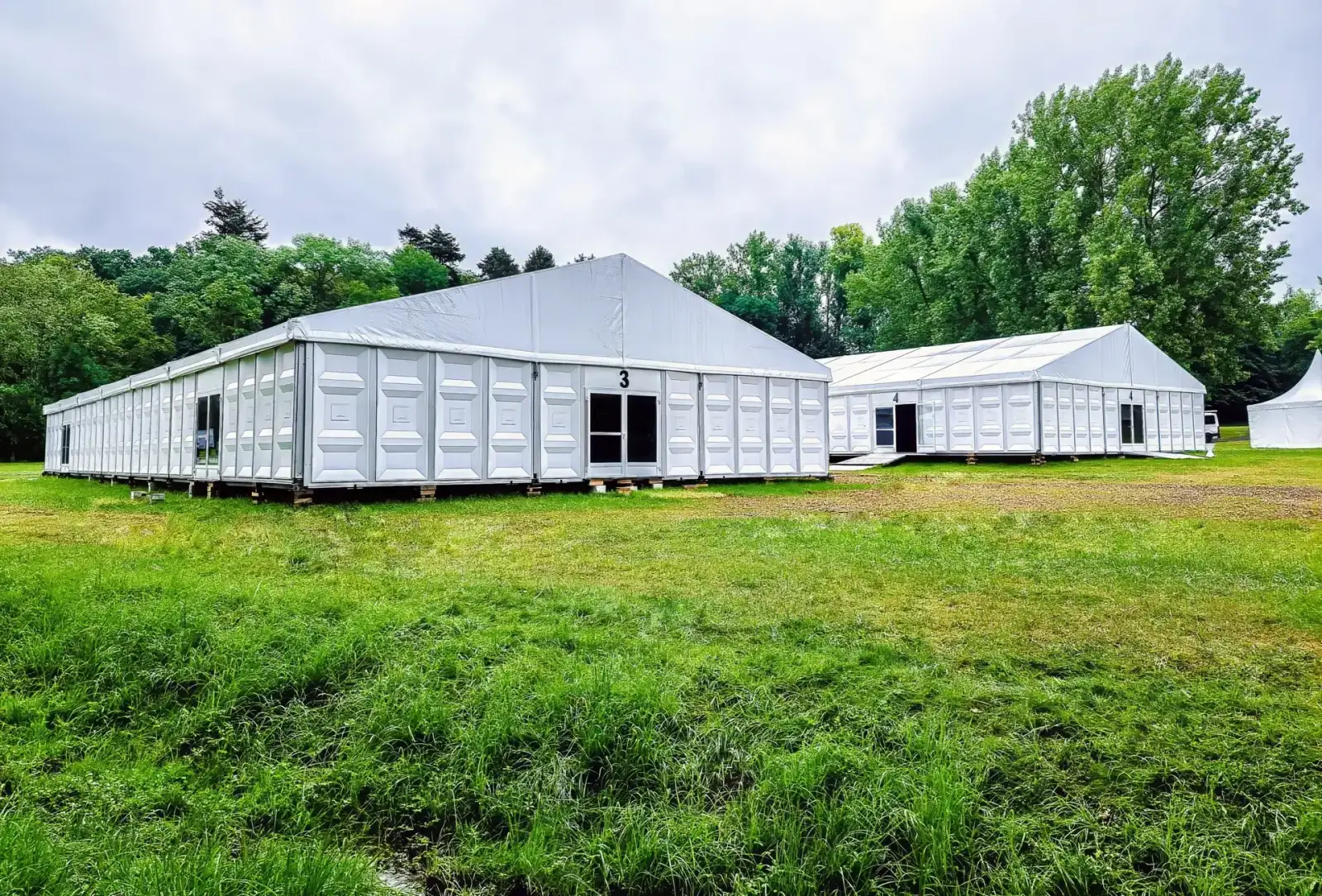
Generally, yes — they need to be. Once a structure stands beyond short exempt periods or serves public or commercial use, Australian councils normally require engineering certification and approval for its use and location. Requirements vary by state and council; genuinely short-term event structures may operate under temporary permits or exemptions. Every PCS structure is engineered to AS 1170, with certification and council approval assistance included in delivery.
This guide is general information, not legal or certification advice. Requirements differ between states, councils and use classes — which is why PCS supplies the engineering and certification documentation and assists throughout the approval process.
The three layers of compliance
- Engineering — AS 1170. The Australian Standard series for structural design actions defines the loads a structure must withstand: permanent and imposed loads, and critically wind actions, which vary by region. A structure engineered to AS 1170 is designed for the wind classification of its actual site, not a generic brochure rating. This is the foundation every other approval sits on.
- The building framework — the NCC. The National Construction Code classifies buildings by use — assembly, storage, office and so on — and sets performance requirements accordingly. Where a structure stands long enough and serves an occupied use, its fit-out, egress, fire services and accessibility are assessed against the relevant class.
- The local decision — council approval. Councils (and private certifiers, where the state allows) assess the documented, engineered structure for its site and use: siting, duration, drainage, amenity and the certification evidence behind it. This is where projects stall when documentation is thin — and pass smoothly when the engineering paperwork arrives complete.
When does a "temporary" structure need approval?
The trigger is a mix of duration, use and occupancy, and it varies by jurisdiction. As a rule of thumb: a marquee standing for a weekend event usually operates under an event permit or exemption; a structure standing for months, occupied by staff or the public, or operating commercially, should be treated as requiring approval. The common failure mode is drift — a "six-week" structure that quietly becomes an eighteen-month one, unapproved, uninsurable and discovered at the worst possible moment. If the honest answer to "how long will this stand?" is measured in months or years, plan the approval from day one. That is the defining difference between event-grade tenting and an engineered semi-permanent structure.
What the approval process looks like
| Stage | What happens | Responsibility |
|---|---|---|
| Site & use assessment | Wind region, ground, siting, intended use class | PCS |
| Engineering documentation | Structural design to AS 1170 for the actual site | PCS |
| Certification | Engineer's certification of the design and anchorage | PCS |
| Application & lodgement | Development application (where required), council questions, conditions | Client lodges · PCS assists |
| Installation & sign-off | Build per certified design; final documentation to owner | PCS |
The division of responsibility is straightforward: PCS prepares the engineering and certification, you lodge any required application with our support, and we answer council questions and ensure compliance with conditions — with the full documentation landing in your file at handover, where a procurement audit or insurer expects to find it. See how delivery works.
Why compliance is a commercial advantage, not a tax
Approved structures are insurable, tenantable and defensible in a tender. For government, education and health projects, the documentation is the difference between a proposal that clears probity and one that doesn't. And because certification attaches to the engineering rather than the address, a relocatable structure re-certifies efficiently at its next site — the compliance investment moves with the asset.