
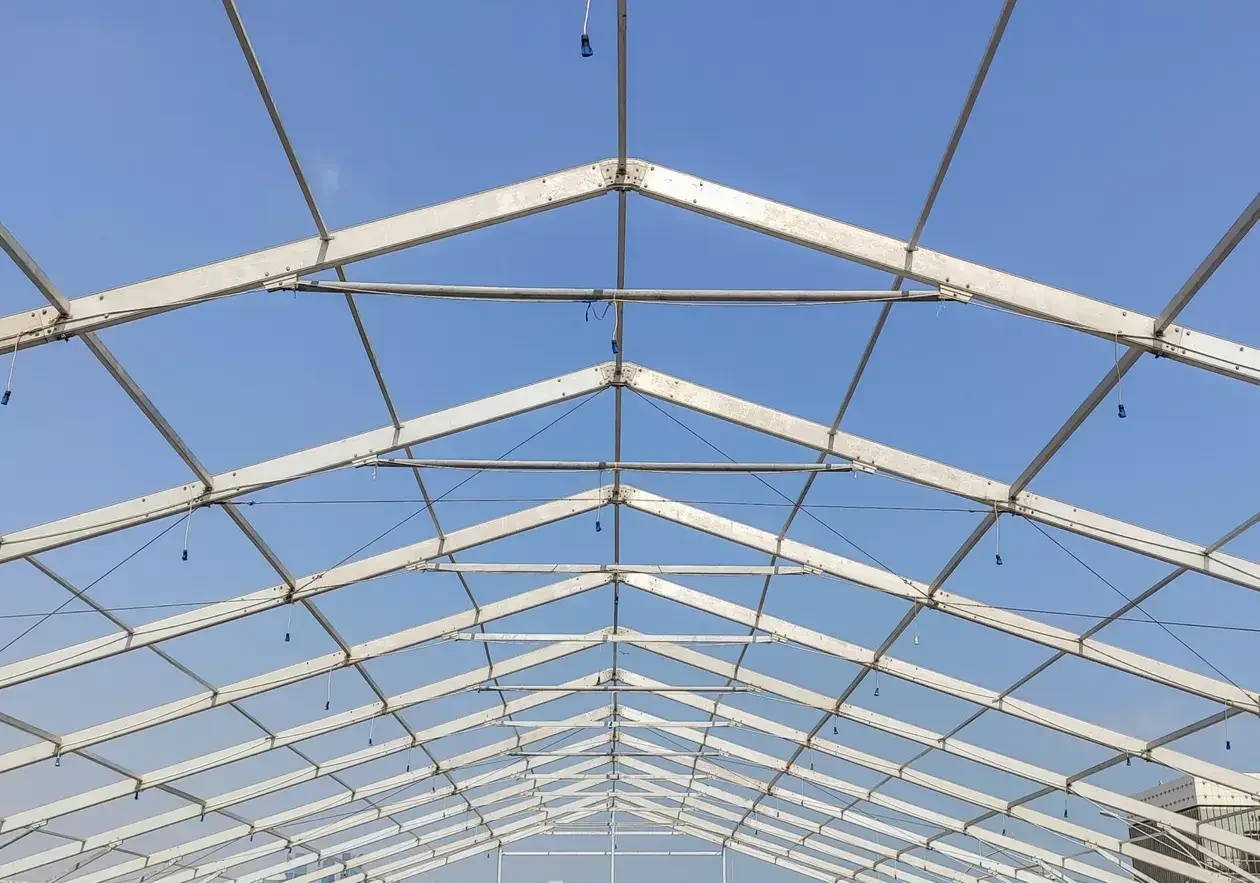
A semi-permanent structure is an engineered, relocatable building — typically an aluminium-framed, clear-span structure with a tensioned membrane or hard-wall facade — designed to stand for months to many years. It is certified to building standards like a permanent building, but installs in weeks and can later be extended, dismantled or relocated.
The term sits deliberately between two categories people already know. A temporary structure — a hire marquee, a site shed — is built for days or weeks and makes no claim to permanence. A permanent building is designed for one site, one footprint, forever. The semi-permanent structure takes the engineering discipline of the second category and the speed and flexibility of the first, and it is quietly replacing both across warehousing, events, aviation and public infrastructure.
What is a semi-permanent structure made of?
Almost all engineered semi-permanent buildings share the same anatomy:
- Frame. Extruded aluminium box-section portals, sometimes hybridised with steel, spanning 3 m to 50 m+ with no internal columns. The frame carries all loads to the perimeter and anchors to concrete, hardstand or engineered footings.
- Roof. Tensioned PVC membrane (single-skin, insulated or inflated twin-skin) or solid insulated panels for thermal performance.
- Walls. Anything from membrane through insulated sandwich panel to full-height glass — chosen for the use, climate and required finish.
- Floor. Existing hardstand or concrete, or an engineered sub-floor and cassette floor system installed with the building.
- Services. Lighting, power, HVAC, fire services and data, integrated during fit-out exactly as in a conventional build.
Because every element is modular, the building's length is effectively unlimited — capacity grows by adding bays, not by starting again. Multi-storey configurations (two and three floors) are engineered the same way, level by level, for hospitality decks, viewing platforms and stacked operational space. See the full PCS structure range and specifications.
How long does a semi-permanent structure last?
Engineered semi-permanent structures commonly serve 5 to 20+ years. Aluminium and steel frames have design lives measured in decades; PVC membrane roofs typically last 15–25 years before replacement; hard-wall cladding lasts as long as any industrial building envelope. Lifespan is set by specification, not by the category.
The practical point: "semi-permanent" describes the commitment, not the durability. The same building that serves three years as overflow warehousing can be re-certified, re-clad and stand for fifteen more — or come down over a fortnight and go to work on another site.
Is a semi-permanent structure a real building?
Functionally, yes — and legally it is treated as one wherever it stands long enough to matter. In Australia an engineered structure is designed to AS 1170 (structural and wind loading), assessed under the National Construction Code for its use class, and council approved for its site and purpose. It is weatherproof, secure, conditioned and finished. What separates it from a conventional building is not quality but reversibility: it arrives without demolition and leaves without ruins. Our compliance guide covers the approval process in detail.
What are semi-permanent structures used for?
| Sector | Typical uses |
|---|---|
| Warehousing & industrial | Distribution and bulk storage, manufacturing space, equipment protection, peak-demand overflow |
| Events & hospitality | Exhibition halls, spectator pavilions, multi-storey hospitality, seasonal venues |
| Aviation & transport | Temporary terminals, passenger facilities, covered walkways, GSE and freight cover |
| Public & institutional | Classrooms, health facilities, depots, emergency response, community venues |
Why choose semi-permanent over building or hiring?
Three forces drive the category's growth:
- Speed. Off-site manufacture plus on-site assembly means weeks to operational, not the year-plus of a conventional build.
- Capital efficiency. A fraction of construction cost per square metre, no permanent land commitment, and residual value that moves with you — compare the numbers in our Australian cost guide.
- Reversibility. Demand changes, leases end, master plans move. A semi-permanent structure is the only building category that can follow — expanded, reconfigured or relocated rather than written off.
Whether it beats hiring depends on duration — the crossover analysis is in hire vs buy — and whether it beats construction depends on how certain your ten-year future is, which is the subject of our comparison framework.